Wellness

Mesenchymal Stem Cell-Derived Exosomes

Exosomes are microscopic biological messengers released by mesenchymal stem cells, carrying signals that may influence how cells respond to inflammation, injury and tissue stress.
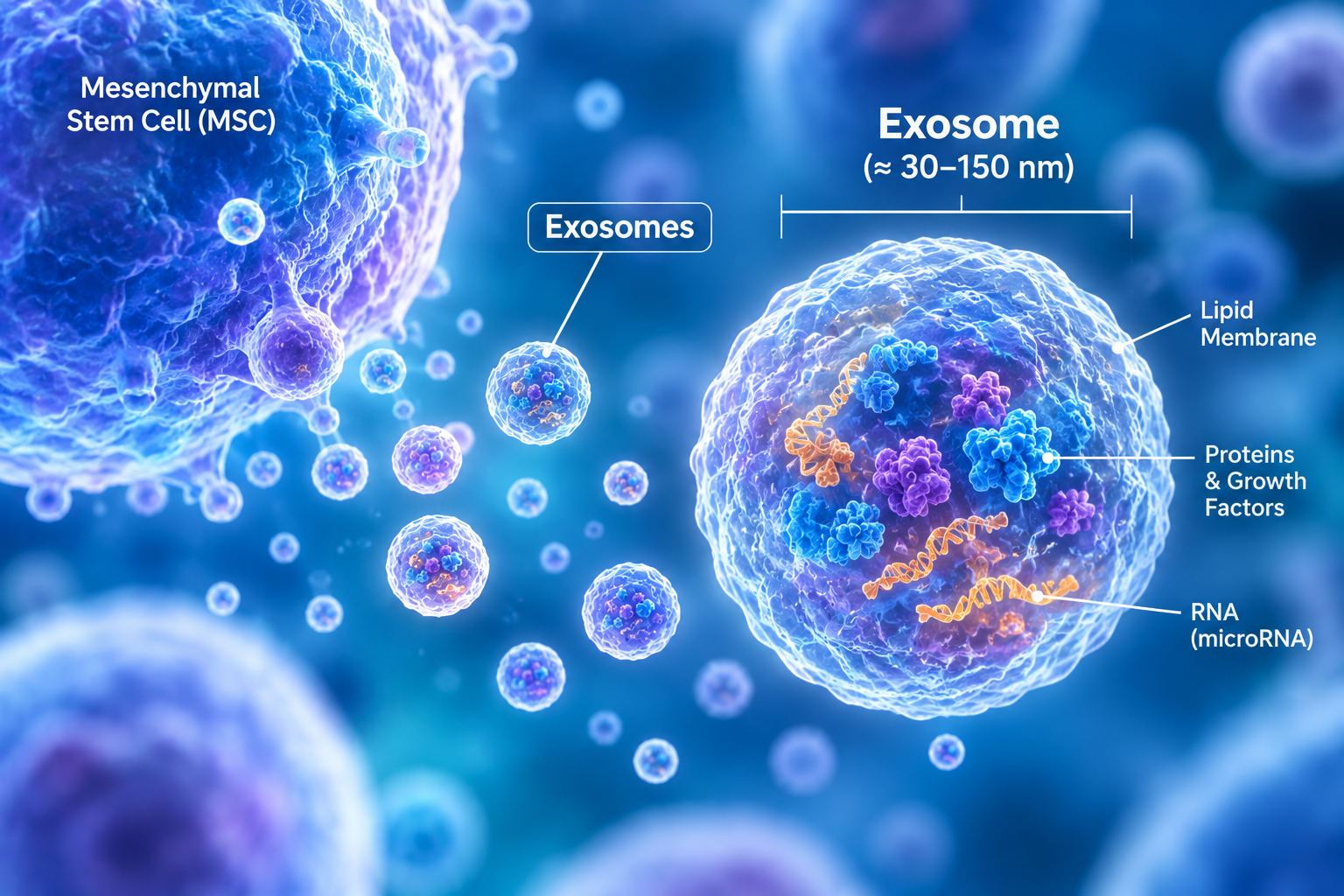
Infographic of a mesenchymal stem cell releasing exosomes containing proteins, growth factors and microRNA

What Are Exosomes?

Exosomes are microscopic extracellular vesicles naturally released by cells, including mesenchymal stem cells (MSCs). They function as biological messengers, carrying important signaling molecules such as proteins, lipids, growth-related factors, and microRNAs that facilitate communication between cells.

Unlike stem cells, exosomes do not contain a complete living cell and cannot independently develop into new tissue. Instead, they carry biological signals that may influence how recipient cells respond to inflammation, injury, and tissue stress.

Mesenchymal stem cell-derived exosomes are an exciting area of regenerative medicine research because of their potential to influence cellular repair mechanisms, regulate inflammatory responses, and support the body’s natural tissue-maintenance processes.

How Do Exosomes Work?

Exosomes deliver biological messages to recipient cells, potentially influencing several important cellular processes:

  • 01Cellular communicationTransfer biological signaling molecules between cells to influence cellular activity.
  • 02Inflammatory modulationInteract with immune and inflammatory pathways that contribute to tissue injury and recovery.
  • 03Tissue repair signalingInfluence processes involved in cellular migration, proliferation, and tissue recovery.
  • 04Collagen and extracellular matrix supportParticipate in signaling pathways associated with collagen organization and tissue structure.
  • 05AngiogenesisInfluence biological pathways involved in the formation of new blood vessels.
  • 06Cellular protectionInvestigated for their ability to influence oxidative stress responses and cellular survival.

Potential Benefits and Applications in Regenerative Medicine

  • 01Tissue Repair and RegenerationResearch suggests MSC-derived exosomes may influence cellular pathways involved in tissue recovery, cell survival, wound healing, and tissue remodeling.
  • 02Joint Health and Cartilage SupportStudies are investigating their potential to protect cartilage cells, regulate joint inflammation, and influence cartilage-degradation pathways associated with osteoarthritis.
  • 03Skin Rejuvenation and Collagen SupportExosomes are being studied for their potential to influence fibroblast activity, collagen organization, skin repair, and tissue remodeling. These mechanisms have generated interest in aesthetic and dermatologic applications.
  • 04Immune and Inflammatory ModulationMSC-derived exosomes may influence immune-cell activity and inflammatory signaling pathways, potentially helping regulate biological responses associated with tissue injury.
  • 05Microcirculation and Tissue RecoveryPreclinical research suggests exosomes may influence angiogenesis, the process through which new blood vessels develop, supporting the delivery of oxygen and nutrients during tissue repair.
  • 06Cellular Protection and Healthy Aging ResearchResearchers are exploring how exosomal signaling may influence oxidative stress, cellular survival, and biological pathways associated with age-related tissue changes.

Why Are Exosomes Important in Regenerative Medicine?

One of the most interesting developments in regenerative medicine is the study of cell-free therapies.

Traditional stem cell therapies involve administering living cells. Exosome-based approaches instead investigate the therapeutic potential of the biological messages released by those cells.

Scientific Evidence and Research

Published studies provide promising preclinical findings:

  1. Skin regeneration and wound healing: A 2025 systematic review and meta-analysis involving 83 preclinical studies found promising effects of MSC-derived extracellular vesicles on wound closure, collagen deposition, and blood vessel formation.
  2. Cartilage protection: A systematic review of MSC-derived extracellular vesicles reported encouraging findings involving cartilage-cell activity, reduced inflammatory signaling, and protection against cartilage degradation in experimental osteoarthritis models.
  3. Clinical translation: A 2026 review highlighted the growing interest in MSC-derived extracellular vesicles while emphasizing the need for standardized manufacturing, dosing, potency testing, and stronger clinical trials.

Important: Much of the evidence remains preclinical. Human clinical studies are still limited, and benefits for skin rejuvenation, joint regeneration, systemic rejuvenation, and anti-aging have not been established.

Our Approach

Why Consider MedUltima Regenerative Medicine?

At MedUltima Aesthetics, we believe in advancing the science of longevity and regenerative medicine through physician-guided, individualized care.

Our philosophy combines modern regenerative research with a personalized approach to supporting cellular health, mobility, tissue function, and healthy aging.

Our goal is to help patients make informed decisions about emerging regenerative therapies while prioritizing safety and individualized treatment planning.

Book a Consultation

The best version of you is only a consultation away

Schedule your appointment today to get started with our specialists.